
Stolpersteine Portugal
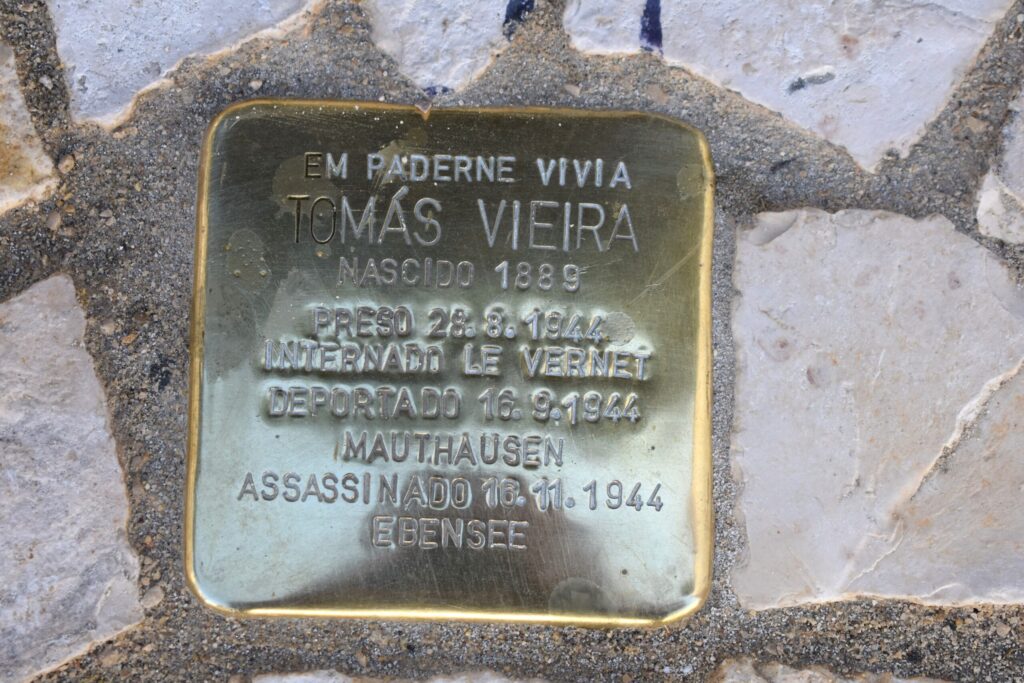
“Stolpersteine” is a German word that translates to “stumbling stones.” It is a project created by Berlin artist Gunter Demnig. These are cubic concrete stones measuring ten by ten centimeters with one side covered by a brass plate. The plate contains an inscription about the survivor, victim, or location.
The “stumbling blocks” are placed on the sidewalk in front of the victim’s former home or on the street if the home no longer exists. They can also be found at historic sites related to World War II.
The aim of the project is to create small monuments in memory of the victims of Nazism. These include those who survived, perished during deportations, perished in concentration camps, or chose suicide to escape extermination. The stones are also placed in historic locations such as ports, squares, ghettos, and others.
Why bring it to Portugal?
The Stolpersteine project is present in almost all European countries, with the exception of Portugal, Belarus, Bulgaria, Estonia, Bosnia-Herzegovina, Montenegro, Albania, and North Macedonia. In addition to its monumental symbolism, the project integrates information on people and tribute locations into its database. This allows us to tell our story in Europe and show our awareness of tolerance by honoring these individuals and places.
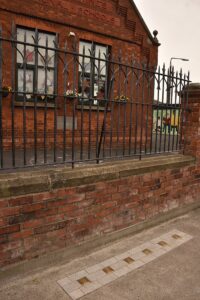
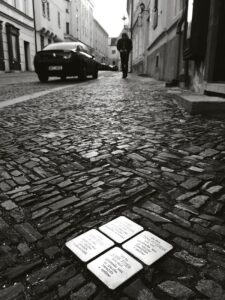
In addition to recognizing victims and raising awareness, the Stolpersteine project is related to many other heritage, preservation, and intercultural dialogue projects.
In Portugal, there are historic sites such as the port of Lisbon, the former Israeli Economic Kitchen, and the house of Aristides de Sousa Mendes in Cabanas de Viriato. There are also several dozen Portuguese victims and survivors from different regions of the country. This adds value to the Stolpersteine project in Portugal as it is not restricted to large cities and has a national impact.
An interesting fact about the Portuguese Stolpersteine project is that the majority of Holocaust victims from Portugal were not Jewish. Bringing the Stolpersteine project to these locations is a way to value local memory and promote education on a subject that is part of these people’s heritage.

A Holocaust survivor once said:
that education and dialogue are the only ways to raise awareness. Memories and stories of those who suffered exist in the memories of their families, in documents, photographs, artistic, academic, and literary productions, or simply through their names.”
“Forgetting and not educating future generations is the only way to erase these memories. We must encourage actions that exalt the memory and history of the righteous. Good actions must be encouraged because remaining silent and harming good actions is colluding with oppressors.”
The ultimate goal of this project is to make our society fairer and never forget the memory of our Portuguese people.
Update — October 2025
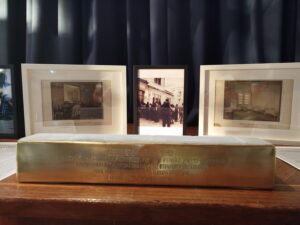
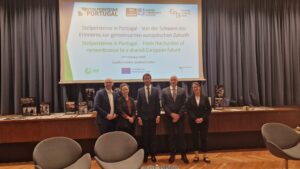
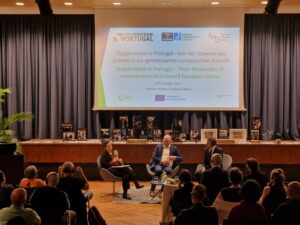
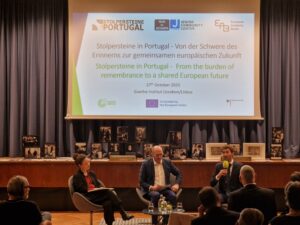
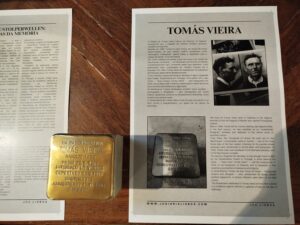
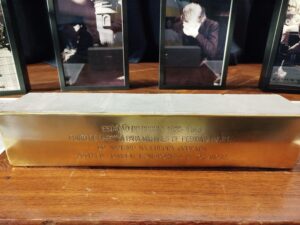
On October 27, 2025, the official inauguration ceremony of the Stolpersteine project in Portugal took place at the Goethe-Institut Lisbon, with the support of the Berlin Academy.
The event was attended by the Ambassador of Germany in Portugal, Dr. Daniela Schlegel, and the Ambassador of Israel, Oren Rozenblat, who emphasized the symbolism of integrating Portugal into the largest decentralized network of remembrance in Europe.
The ceremony also featured Dr. Sara Han, who delivered a lecture on the importance of memory and education as forms of resistance and intercultural dialogue.
The occasion marked the official beginning of Stolpersteine Portugal, reinforcing the commitment to preserving memory and valuing Jewish and humanitarian history in the country.
Update, February 2026
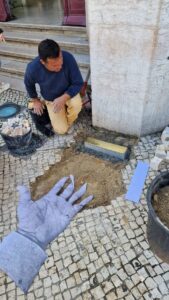
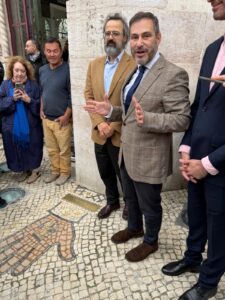
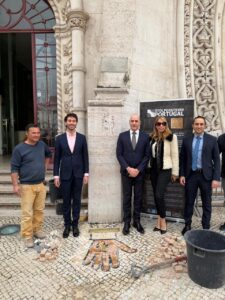
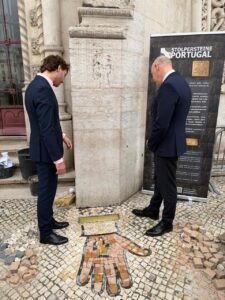
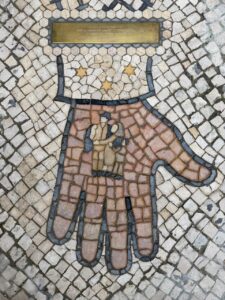
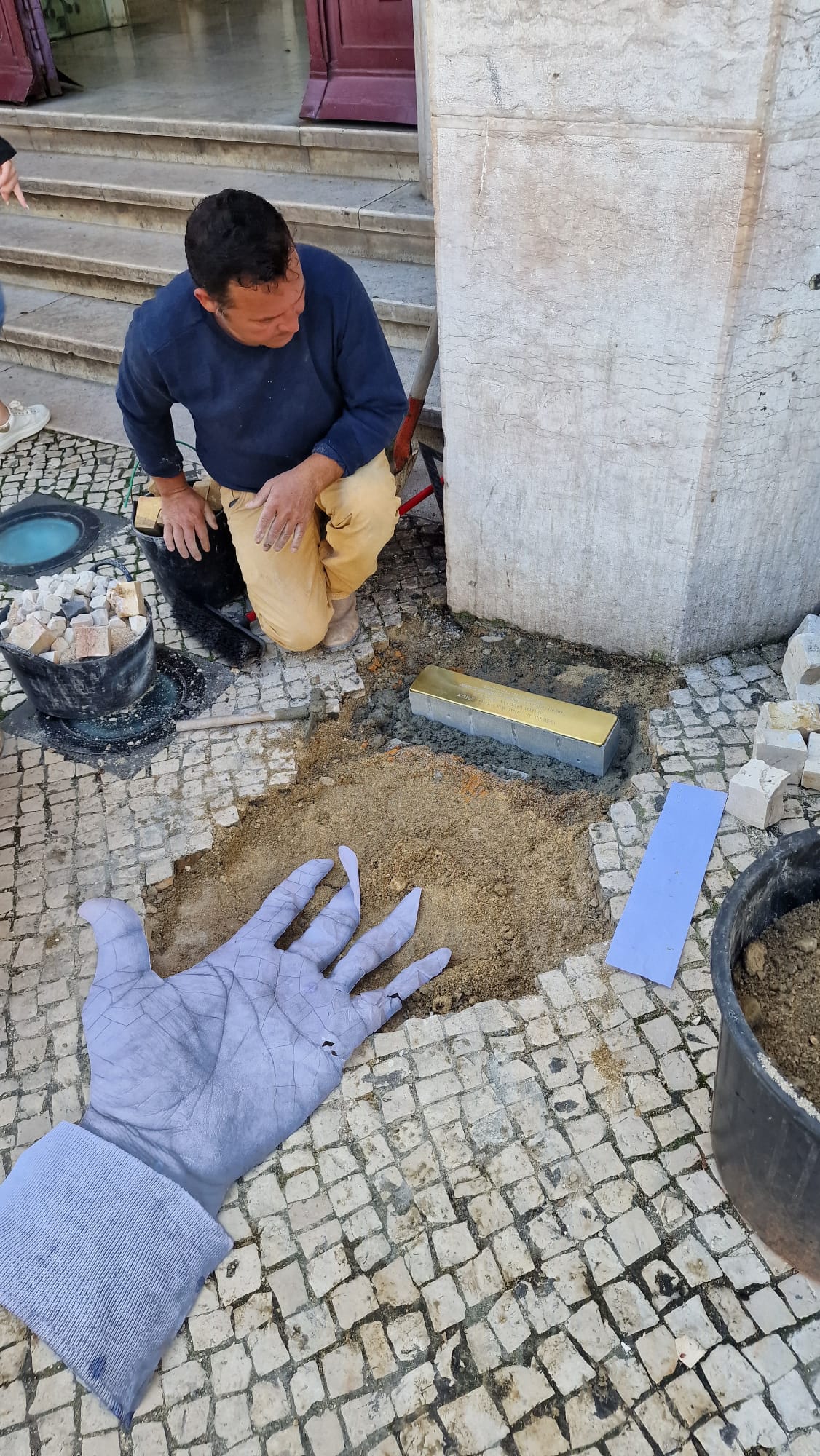
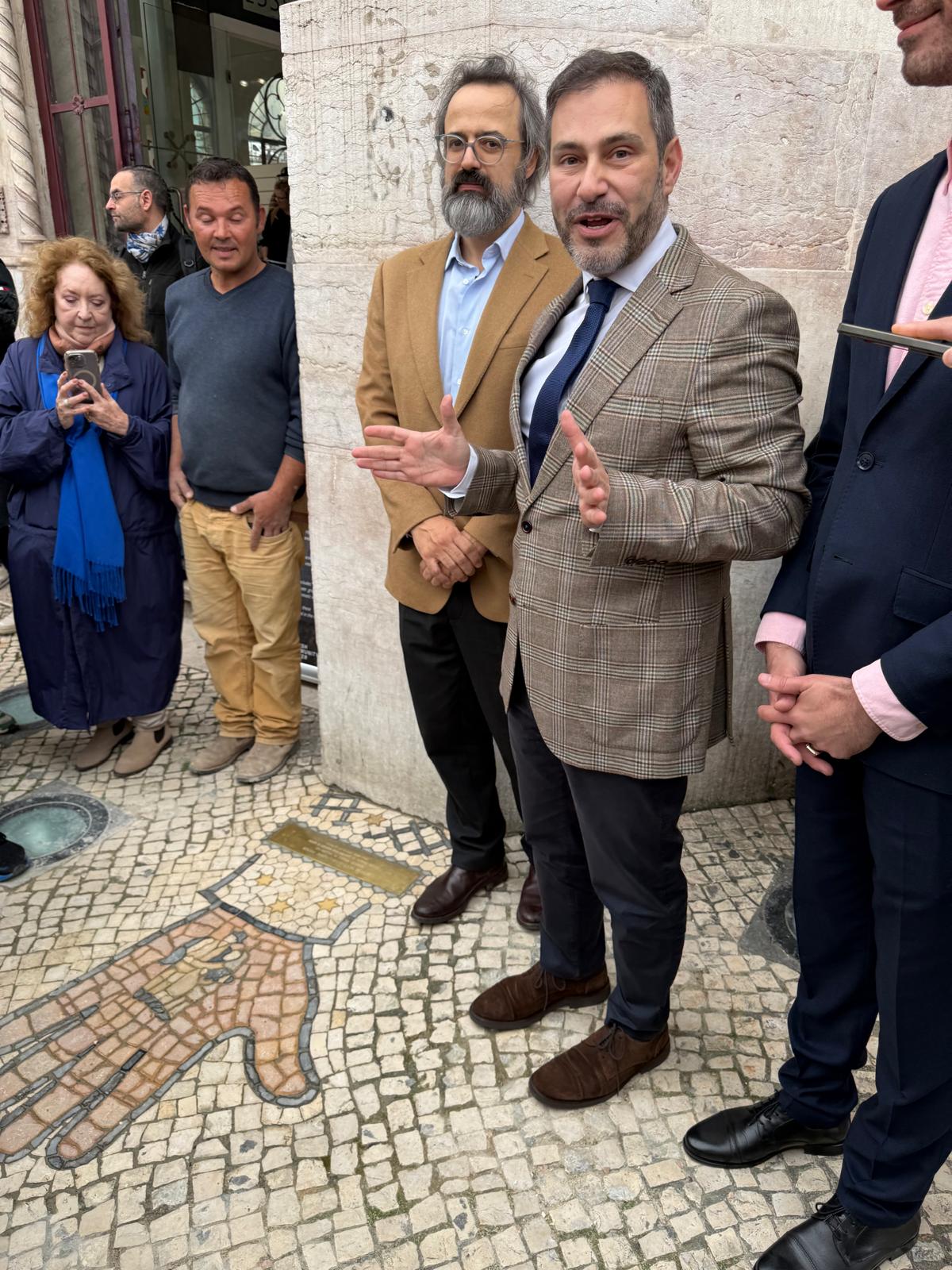
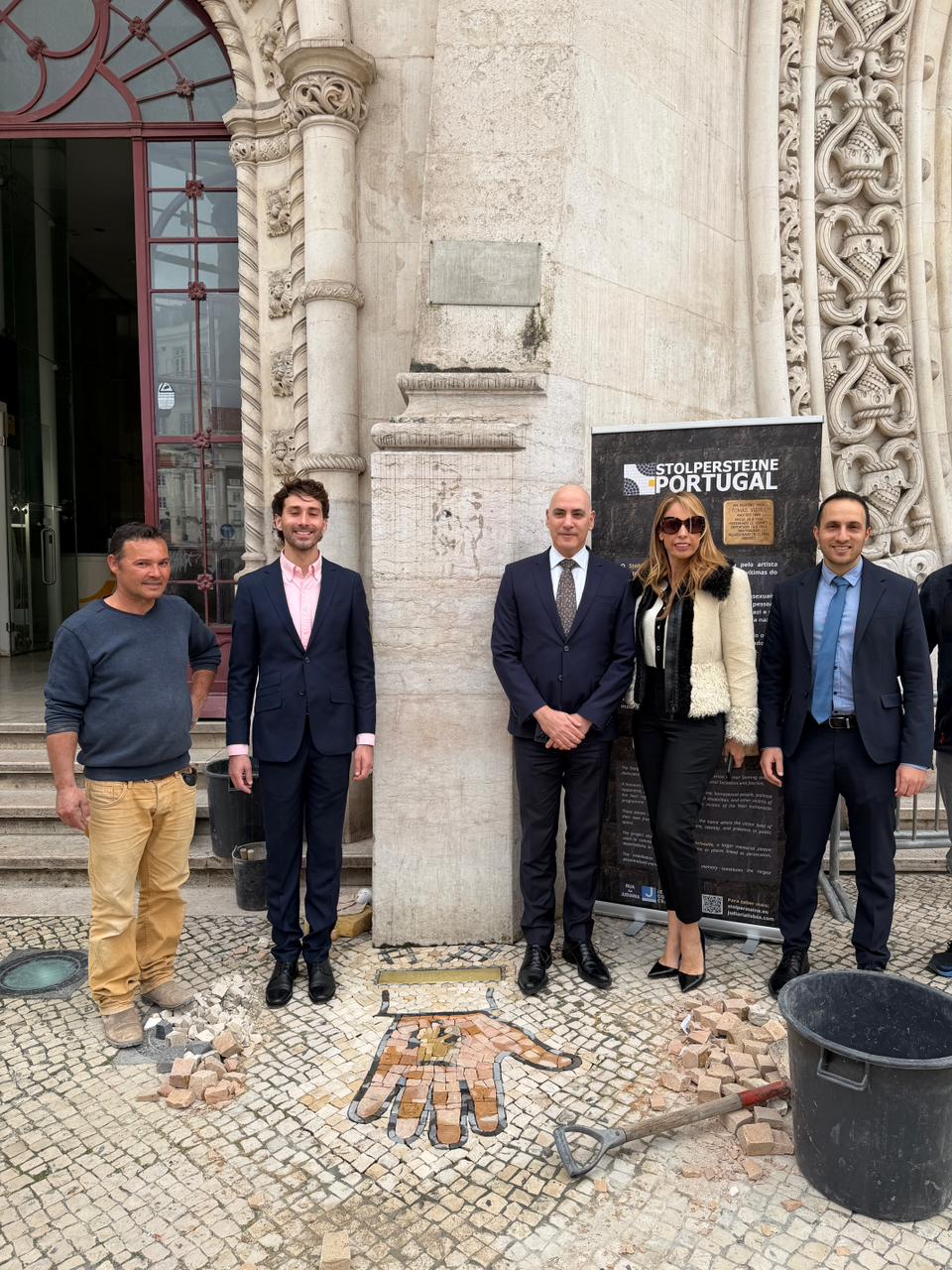
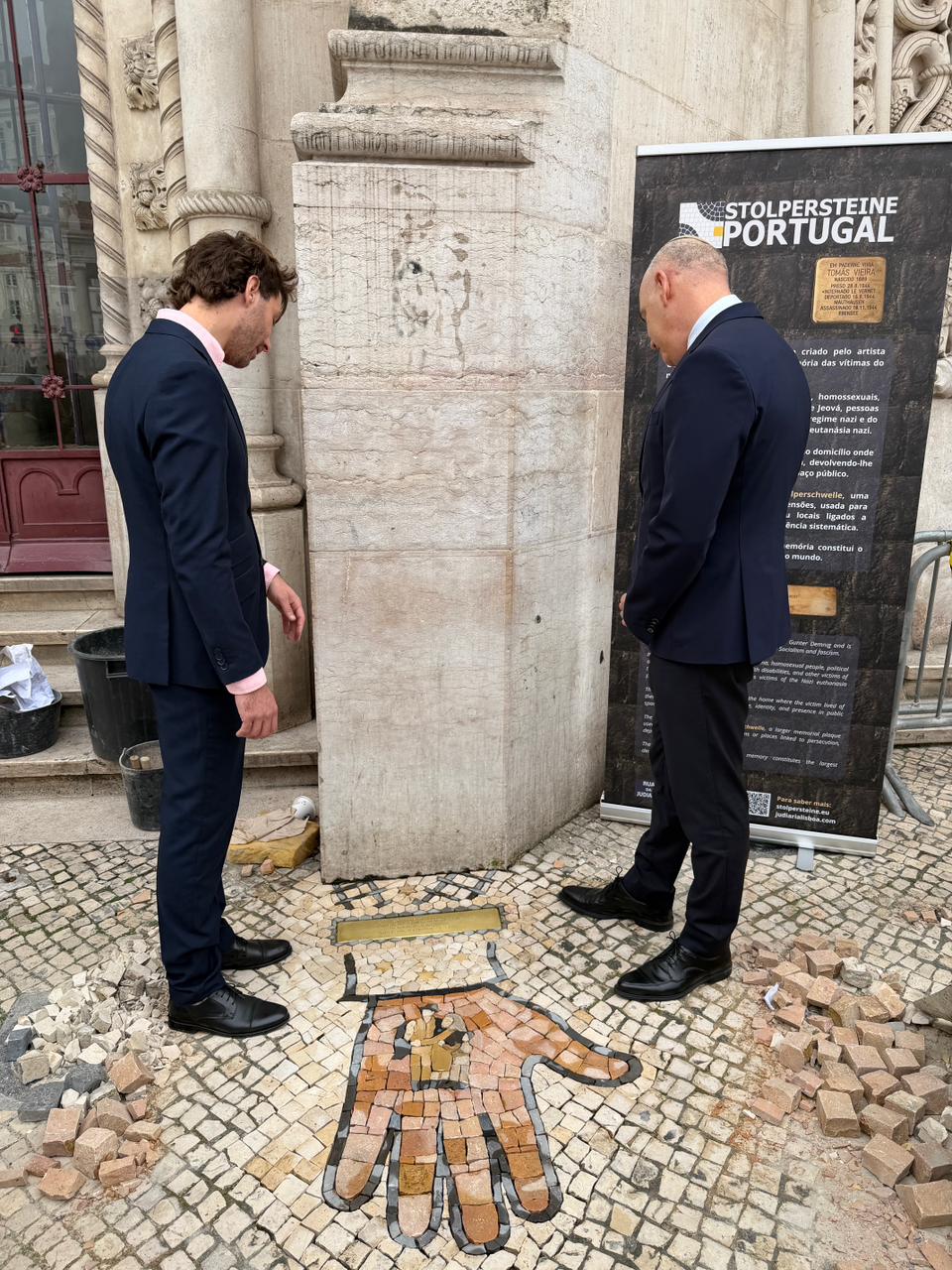
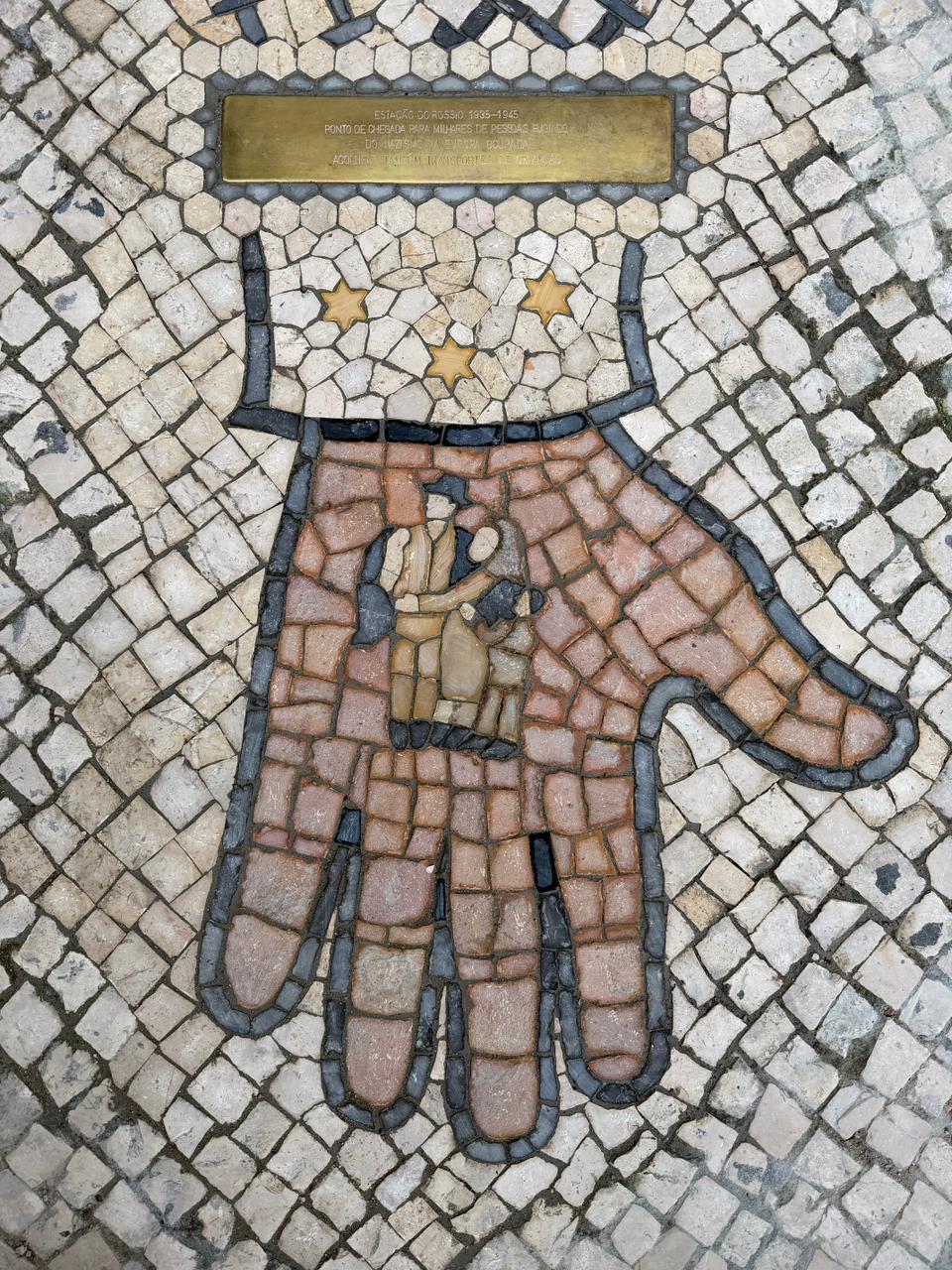
On 27 February 2026, the first Stolperschwelle in Lisbon and in Portugal was installed next to Rossio Station, dedicated to the memory of the refugees who passed through the city while fleeing Nazism. The ceremony was attended by Diogo Moura, Councillor for Culture of Lisbon City Council, the Ambassador of Israel to Portugal, Oren Rozenblat, and João Taborda da Gama, National Coordinator of the European Strategy to Combat Antisemitism and Foster Jewish Life. Executed by master stone paver Luís Pereira, this installation represents the result of nearly five years of persistent work, marked by obstacles, refusals, and resistance that only confirmed the need for this project in Portugal. Conceived and brought to the country by Luciano Waldman, the project was developed through the work of the Centro Cultural Rua da Judiaria and became a reality thanks to institutional persistence, the support of partners, and the contributions of all those who believed in it, supported it, and donated so that this memory could take its place in public space.
Update, April 2026
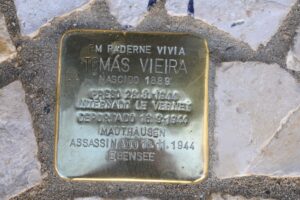
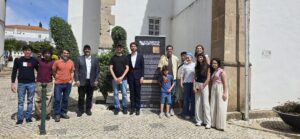
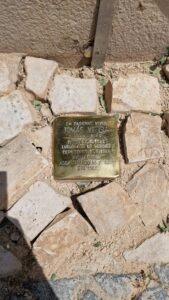
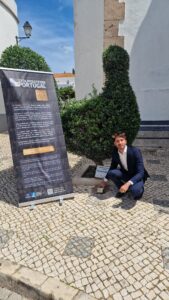
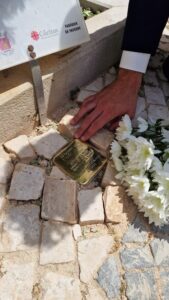
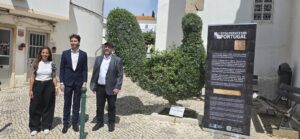
On 27 April 2026, a Stolperstein was placed in Paderne, in the municipality of Albufeira, in memory of Tomás Vieira, a Portuguese citizen from this parish and a victim of the Second World War.
The stone was installed near the Parish Church of Paderne, with the support of the Paderne Parish Council. The ceremony was attended by Luciano Waldman, from Judiaria de Lisboa, Samuel Cohen, rabbi of Judiaria de Albufeira, and Rita Coelho, President of the Paderne Parish Council.
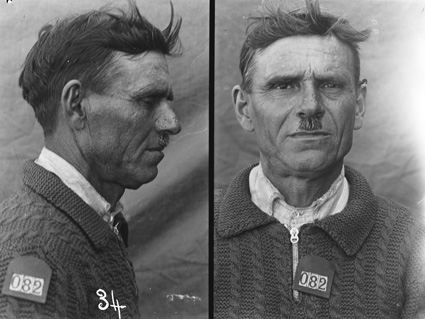
Tomás Vieira was born in Paderne on 7 March 1889. He later emigrated to France with his wife and daughters, where he opened a small grocery shop in Paris. During the Second World War, he was arrested in France, imprisoned in Bordeaux, and deported to the Vernet internment camp. In September 1944, he was deported to Mauthausen. He died on 16 November 1944 in Ebensee, a subcamp of Mauthausen.
With this stone, Paderne now preserves the memory of one of its own in the public space. The story of Tomás Vieira reminds us that the violence of the war also reached Portuguese lives, many of them forgotten or little known.
Next Steps
Stolpersteine Portugal continues to develop, with new installations planned in different parts of the country.
The next stone has already been approved and is currently being coordinated with the Municipality to define the most suitable installation date, expected around mid-2026.
The project continues to build a map of memory in Portugal, stone by stone, name by name, connecting individual stories to the places where these lives must be remembered.
To support the project, collaborate, or request more information, please contact us.
Join us in building this collective memory:
https://english.judiarialisboa.com/support-us